Affordable mini 3D scanners are becoming increasingly popular in design and manufacturing. However, are mini 3D scanners accurate enough for industrial production? This article provides a detailed analysis of their advantages, disadvantages, and professional 3D scanning solutions for businesses.
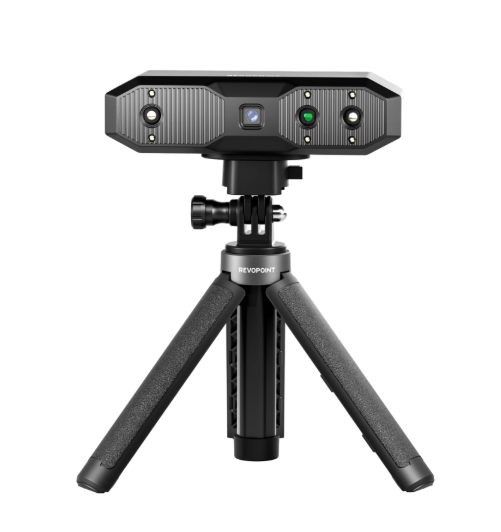
A mini 3D scanner is a compact, low-cost 3D scanning device typically designed for basic applications such as learning, research, or scanning small details.
In recent years, the market has seen many affordable mini 3D scanners priced from a few million to a few tens of millions of Vietnamese dong. This leads many businesses or individuals to believe that a mini 3D scanner is sufficient for their product design or manufacturing needs.
However, in reality, the capabilities of handheld mini 3D scanners are usually only suitable for simple applications. When entering a manufacturing or engineering design environment, this device reveals quite a few limitations.
Are mini 3D scanners accurate enough for manufacturing?
One of the most important factors in the 3D scanning process is data accuracy. In industries such as mechanical engineering, automotive, mold making, or reverse engineering, errors of just a few hundredths of a millimeter can affect the entire production process.
Most mini 3D scanners on the market today have an accuracy ranging from 0.1 mm to 0.5 mm. This level of error is acceptable for simple models, but it is insufficient for applications requiring high precision.
In industrial manufacturing, many parts require an error of only a few micrometers. If using a cheap mini 3D scanner, the data obtained may not be detailed enough to create accurate CAD models or for dimensional inspection.
Although mini 3D scanners offer advantages in terms of cost and flexibility, they present significant limitations when applied in large-scale production environments.
First, the ability to scan complex details. Many handheld mini 3D scanners struggle with reflective surfaces, metal surfaces, or details with complex shapes.
Second, the scanning speed is quite slow. When digitizing a large product such as automotive components or industrial equipment, mini 3D scanners often take a long time to collect data.
Another issue is data stability. In many cases, scan data from inexpensive mini 3D scanners may lack detail or exhibit noise, making data processing more difficult.
Despite its limitations in industrial environments, a mini 3D scanner remains a suitable option in some cases.
For example, it can be used for educational purposes, research, or digitizing small objects. Additionally, a handheld mini 3D scanner is suitable for simple design projects, art modeling, or 3D printing small products.
For individuals or businesses new to 3D scanning technology, using an inexpensive mini 3D scanner can help familiarize themselves with the 3D digitization process before investing in professional equipment.
For manufacturing or engineering design businesses, using a professional 3D scanner is a more efficient option than a mini 3D scanner.
Industrial 3D scanners offer high accuracy, fast scanning capabilities, and excellent handling of complex surfaces. This helps businesses obtain accurate 3D data for design, dimensioning, and manufacturing.
Some popular professional 3D scanners currently in use include:
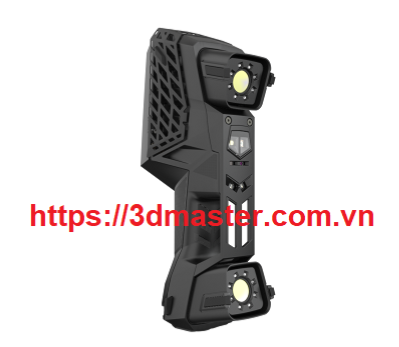
Faro Creaform HandySCAN EVO|Elite 3D scanner

Faro Creaform MetraSCAN BLACK™|Elite 3D scanner

Faro Creaform Go!SCAN SPARK™ 3D Scanner
These 3D scanners are significantly more expensive than mini 3D scanners, but in return, businesses can obtain accurate and stable data for engineering applications.
Not every business is ready to invest in a professional 3D scanning system right away. In that case, renting a 3D scanner or using a 3D scanning service is a reasonable option.
Renting 3D scanners allows businesses to access modern equipment without incurring large initial investment costs. Simultaneously, businesses can utilize professional 3D scanners instead of relying on inexpensive mini 3D scanners.
3D Master currently offers 3D scanning services and rents Faro Creaform 3D scanners with a range of high-end models, meeting needs from reverse engineering and dimensioning to product digitization.

Mini 3D scanners are a cost-effective solution suitable for basic applications. However, for industrial manufacturing, engineering design, or high-precision dimensioning, mini 3D scanners often fail to meet requirements.
Businesses should consider using professional 3D scanners to ensure accurate and consistent scan data. If you don't have sufficient budget for equipment investment, renting a 3D scanner or using a 3D scanning service is the optimal solution.
If your business is looking for a highly accurate 3D scanning solution, contact 3D Master for consultation and to experience the most advanced 3D scanning technologies available today.
See more: High-quality 3D scanners at good prices at 3D Master
Hotline - Zalo - LINE - Telegram - WhatsApp - Viber - Kakaotalk: +84 982 089 198 | 0986333960
Email: cuong3dmaster@gmail.com | hung3dmaster@gmail.com | tech3dmaster@gmail.com
Website: https://3dmaster.com.vn